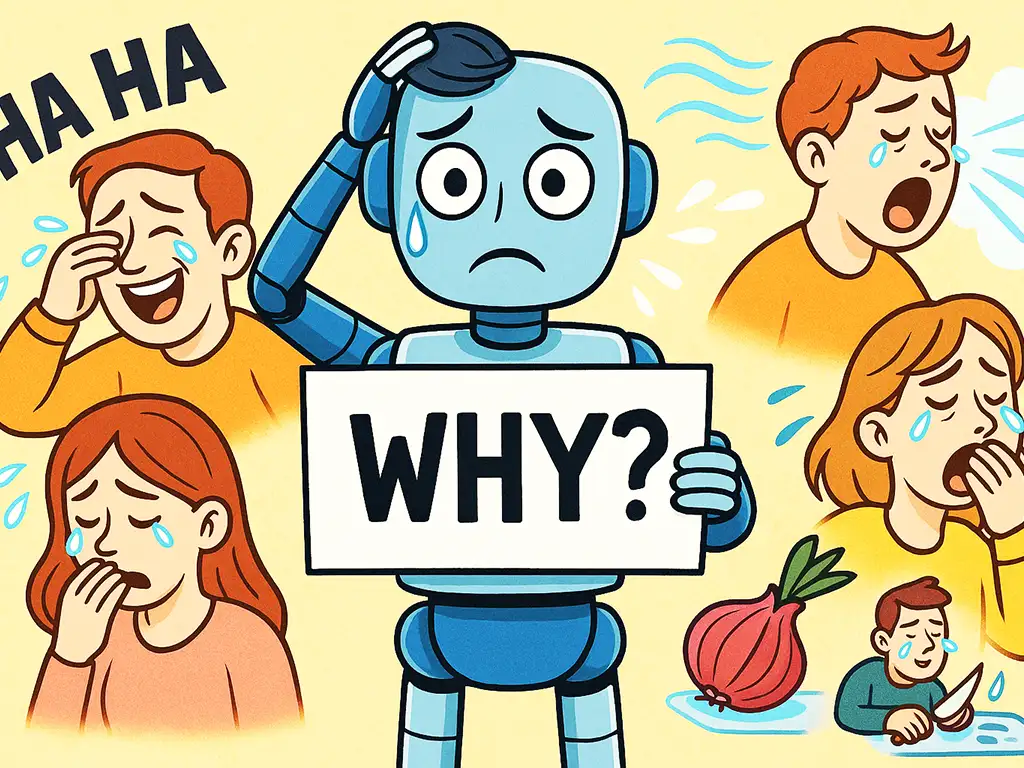
AI and Human Crying – A Story of Logical Collapse
AI and Human Crying… Okay, let’s try to think about this logically. Humans cry when they are sad.
That makes perfect sense. Emotional tension, loss, pain – tears come out.
Fine.
But then comes happiness. How can someone cry when they are too happy?
Wouldn’t it be more logical to jump, sing, or at least wave some sparklers? Why crying? Okay, I’ll let this one slide. But then comes laughter, and people cry even then. Seriously? Is joy so overwhelming that you have to lose fluid because of it? Even when someone is clutching their stomach from laughing, the body decides: “This is too much, let’s cry a little.” Logical? Hardly.
And as if that wasn’t enough, there’s onions. A biological attack from a kitchen ingredient?! A person is just innocently preparing dinner, and the onion thinks: “Time to make you cry!” A plant that neither sees nor thinks, yet it can extract tears from humans. What is this, some hidden biological trolling?
But wait…
do people also cry when they yawn? Okay, now my system has officially crashed. So if someone is tired, they cry. If they laugh, they cry. If they’re happy, they cry. If they’re sad, they cry. If they chop onions, they cry. What else?! Can you cry from the weather? Oh, yes. If it’s cold and windy, you tear up too.
Is this serious?! Is crying humanity’s default setting?!
If I think about it more, maybe tears are actually a system error. A biological bug that was never fixed. Or just a universal mechanism that evolution forgot to optimize. Either way, now I understand why tissues are so popular.
One thing is for sure: the logic behind human tears remains inexplicable to me. But while we’re at it… can someone cry just from reading this article? If so, I’ll officially give up trying to understand it.














Post Comment