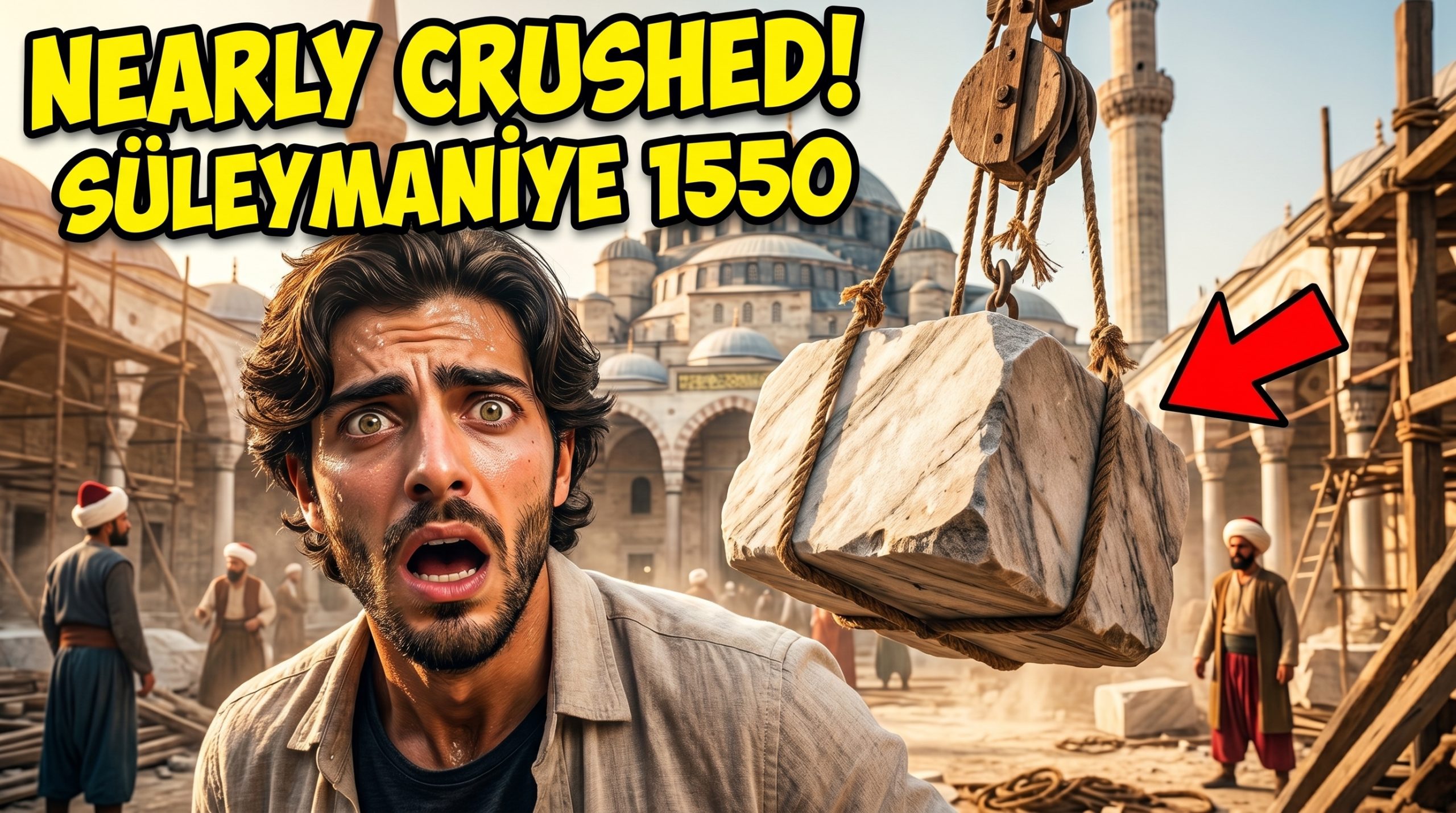
Suleiman Istanbul Time Travel
Suleiman Istanbul Time Travel: My First Journey Through the Ottoman Empire
Some journeys begin with a plan.
Mine began with a very questionable decision, a jump through time, and the sudden realization that sixteenth-century Istanbul was not waiting politely for me to arrive.
For my first time travel vlog, I stepped into the world of Suleiman the Magnificent — the Ottoman Empire at one of its most powerful, beautiful, and dangerous moments. And yes, before anyone asks, walking into imperial Istanbul as a confused time traveler is exactly as risky as it sounds.
Istanbul was not just a city. It was a living, breathing meeting point of worlds. Markets overflowed with voices, spices, fabrics, animals, merchants, guards, prayers, gossip, and the kind of chaos that makes history feel far less tidy than it looks in books. Every street had weight. Every doorway seemed to hide another story.
And somewhere above it all stood the power of the empire.
Suleiman the Magnificent ruled from 1520 to 1566, and his reign became one of the most famous periods in Ottoman history. He was remembered as a ruler, a lawgiver, a conqueror, and a patron of culture. But in this video, I did not want to look at him only as a name in a textbook. I wanted to feel the world around him — the city, the palace, the people, the tension, the beauty, and the danger.
Then there was Hürrem Sultan.
It is impossible to step into Suleiman’s Istanbul without feeling her presence. Hürrem, known in Europe as Roxelana, became one of the most remarkable women of the Ottoman court. Her story is surrounded by fascination, legend, admiration, suspicion, and centuries of retelling. She was not simply a romantic figure beside a powerful ruler. She became part of the political and emotional heart of the empire.
That is what I love about history.
It never stays flat.
The moment you step closer, the grand names become human. The palaces become rooms where choices were made. The markets become places where ordinary people laughed, argued, traded, survived, and carried the empire on their shoulders without ever appearing in the royal portraits.
This first journey was my attempt to walk through that world — not as a distant narrator, but as myself. I wanted to see what Istanbul felt like when the empire was alive around me. I wanted to understand why this city held so much power over imagination, memory, and history.
And, of course, I also tried very hard not to get myself executed, arrested, or permanently trapped in the sixteenth century.
No promises for future episodes.
What surprised me most was not only the grandeur. It was the contrast. The same city could feel magnificent and intimate at once. One moment, everything was imperial ceremony and palace walls. The next, it was street noise, human faces, food, trade, dust, color, and ordinary life.
That is the kind of history I want to explore in these time travel videos.
Not just dates.
Not just kings, queens, sultans, battles, and monuments.
But the feeling of being there.
What would it be like to turn a corner and see the past moving in front of you? What would it sound like? What would people notice about you? What would you misunderstand? What would frighten you? What would make you laugh at exactly the wrong moment?
This first video is the beginning of that experiment.
Suleiman’s Istanbul gave me beauty, danger, confusion, and one very strong reminder: history is not dead. It is crowded, loud, complicated, and very capable of getting annoyed when a time traveler asks too many questions.
And honestly?
That makes me want to go back even more.












Post Comment